
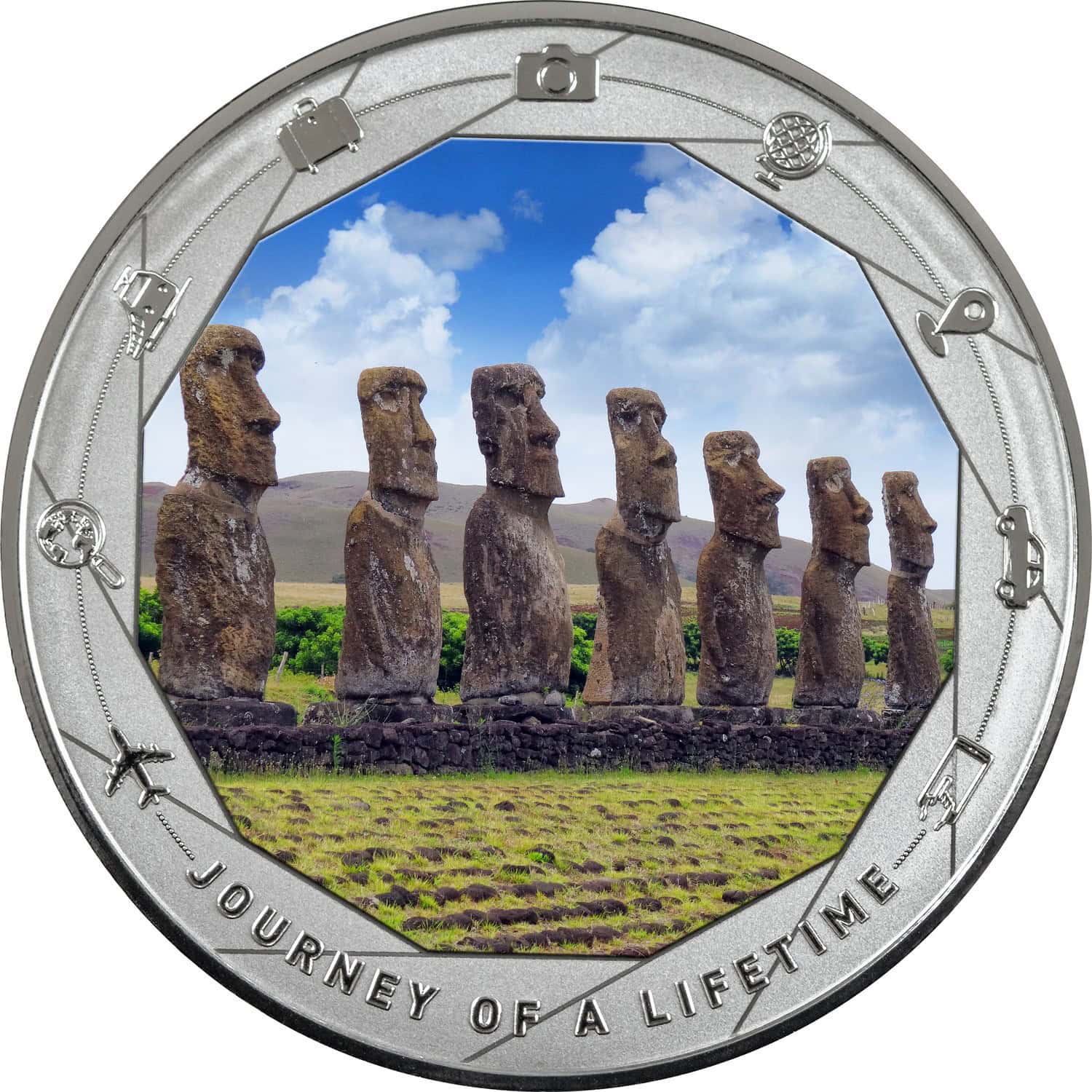

Cameroon – 2025 – 1000 Francs – Easter Island (Journey of a Lifetime series) 1oz silver
€ 159.00
In Stock / On Backorder
Click to see the full Journey of a Lifetime series
| Issuing Country | Cameroon |
| Year of Issue | 2025 |
| Face Value | 1000 Francs |
| Metal | Silver |
| Fineness (purity) | 999/1000 |
| Weight | 1 oz |
| Diameter | 40 mm |
| Quality | PROOF |
| Mintage | 99 pcs |
| Scope of Delivery | Box Certificate |
| Special features | – |
Description
Click to see the full Journey of a Lifetime series
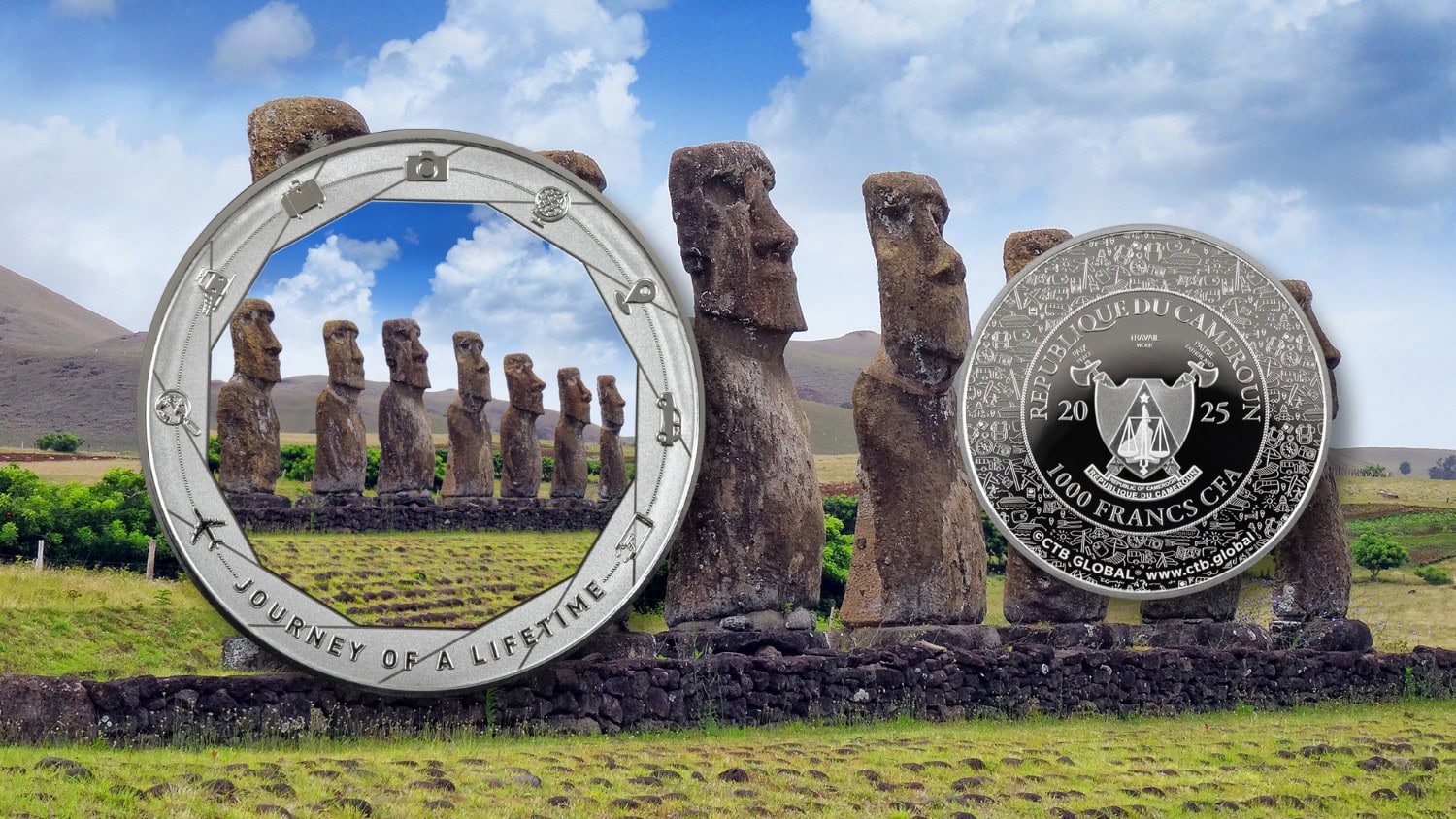
Discover the mysteries of the Pacific with the ‘Easter Island’ coin, a captivating release in the Journey of a Lifetime series by PopCoins®, licensed by CTB Global®. This finely struck 1 oz pure silver coin portrays the iconic Moai statues in vibrant color, honoring the cultural heritage and enduring enigma of Rapa Nui. The artistry captures the silent guardians gazing across the island, embodying centuries of tradition and mystery that continue to fascinate the world. Each coin is presented in a collectible blister pack with an accompanying traveler’s story, sharing the spirit of exploration and personal connection behind this remarkable place. With only 99 pieces minted worldwide, it stands as both an artistic tribute and a valuable rarity. Available now at select modern coin dealers—secure your piece of this legendary wonder before it vanishes.
Coin description
In the middle of the reverse is a high resolution printed “Easter Island” image. Around the image is a circle of elements related to travelling which appear on each of the coins. At the bottom the series name “JOURNEY OF A LIFETIME” is written.
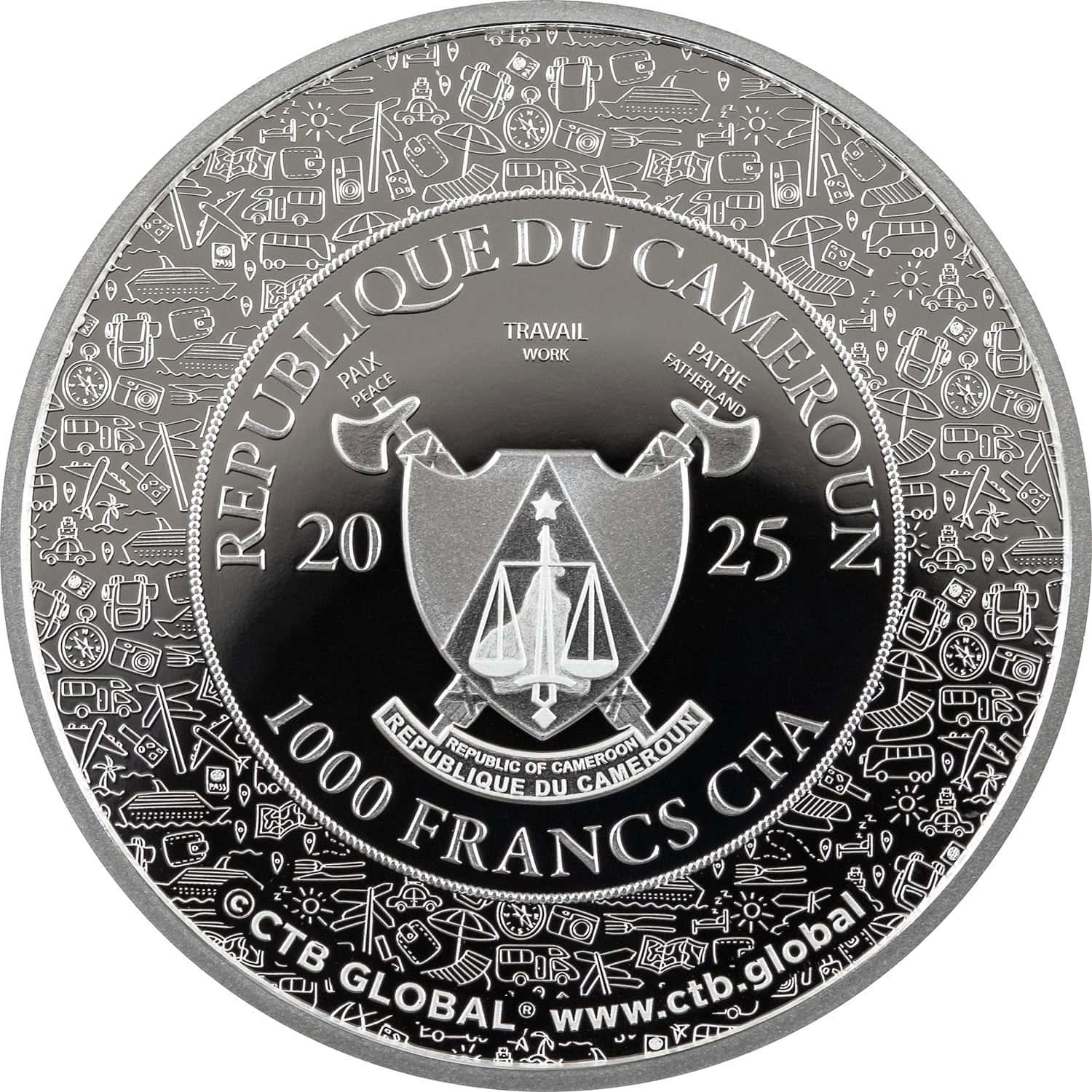
The obverse side of the coin depicts the unique coat of arms for Cameroon. Surrounding the coat of arms there are various elements related to travelling. The coat of arms has the inscriptions: “REPUBLIQUE DU CAMEROUN” (country of issue), “2025” (the year of issue) and “1000 FRANCS CFA” (the face value).
Background information
Easter Island, or Rapa Nui, was first settled by Polynesian navigators around the 12th century. The society developed an elaborate culture centered on ancestor worship, expressed through the carving and erection of monumental moai statues. These statues, made from volcanic tuff at Rano Raraku quarry, were transported and erected on ceremonial platforms called ahu along the coasts. The peak of construction occurred between the 13th and 16th centuries, when hundreds of statues were completed. The moai represented deified chiefs and reinforced lineage authority. Over time, deforestation and ecological strain weakened the island’s ability to sustain its population. Internal conflicts, known as the “Huri Moai” period, led to the toppling of many statues. In 1722, Dutch explorer Jacob Roggeveen made the first European contact, naming the island after Easter Sunday. Later visits by Spanish, British, and others further impacted the island. Despite upheavals, the cultural achievements of the Rapa Nui remain among Polynesia’s most remarkable legacies.
Related products
-
Cameroon – 2025 – 1000 Francs – Horseshoe Bend (Journey of a Lifetime series) 1oz silver
€ 159.00 Add to cart -
Cameroon – 2025 – 1000 Francs – Perito Moreno Glacier (Journey of a Lifetime series) 1oz silver
€ 159.00 Add to cart -
Cook Islands – 2026 – 25 Dollars – Jefferson Memorial 5oz Silver Historical Monuments
€ 899.00 Add to cart -

Cook Islands – 2025 – 25 Dollars – Taj Mahal 5oz Silver Historical Monuments
€ 699.00 Add to cart -

Cameroon – 2025 – 1000 Francs – Christ the Redeemer (Journey of a Lifetime series) 1oz silver
€ 159.00 Add to cart -

Cook Islands – 2026 – 10 Dollars – Jefferson Memorial 2oz silver Historical Monuments
€ 379.00 Available on at a future date.Pre-Order Now -

Cook Islands – 2024 – 10 Dollars – Château de Chambord 2oz silver
€ 222.95 Add to cart -
Cook Islands – 2024 – 25 Dollars – Château de Chambord 5oz silver
€ 639.00 Add to cart -
Cook Islands – 2026 – 25 Dollars – Petra Al-Khazneh 5oz silver
€ 799.00 Add to cart -

Cook Islands – 2026 – 10 Dollars – Statue of Liberty 2oz silver (Timeless Icons series)
€ 399.00 Read more -
Cook Islands – 2025 – 25 Dollars – Machu Picchu Bucket List 5oz silver
€ 799.00 Read more -
Cook Islands – 2025 – 20 Dollars – Great Wall of China 3oz silver
€ 459.00 Read more


