
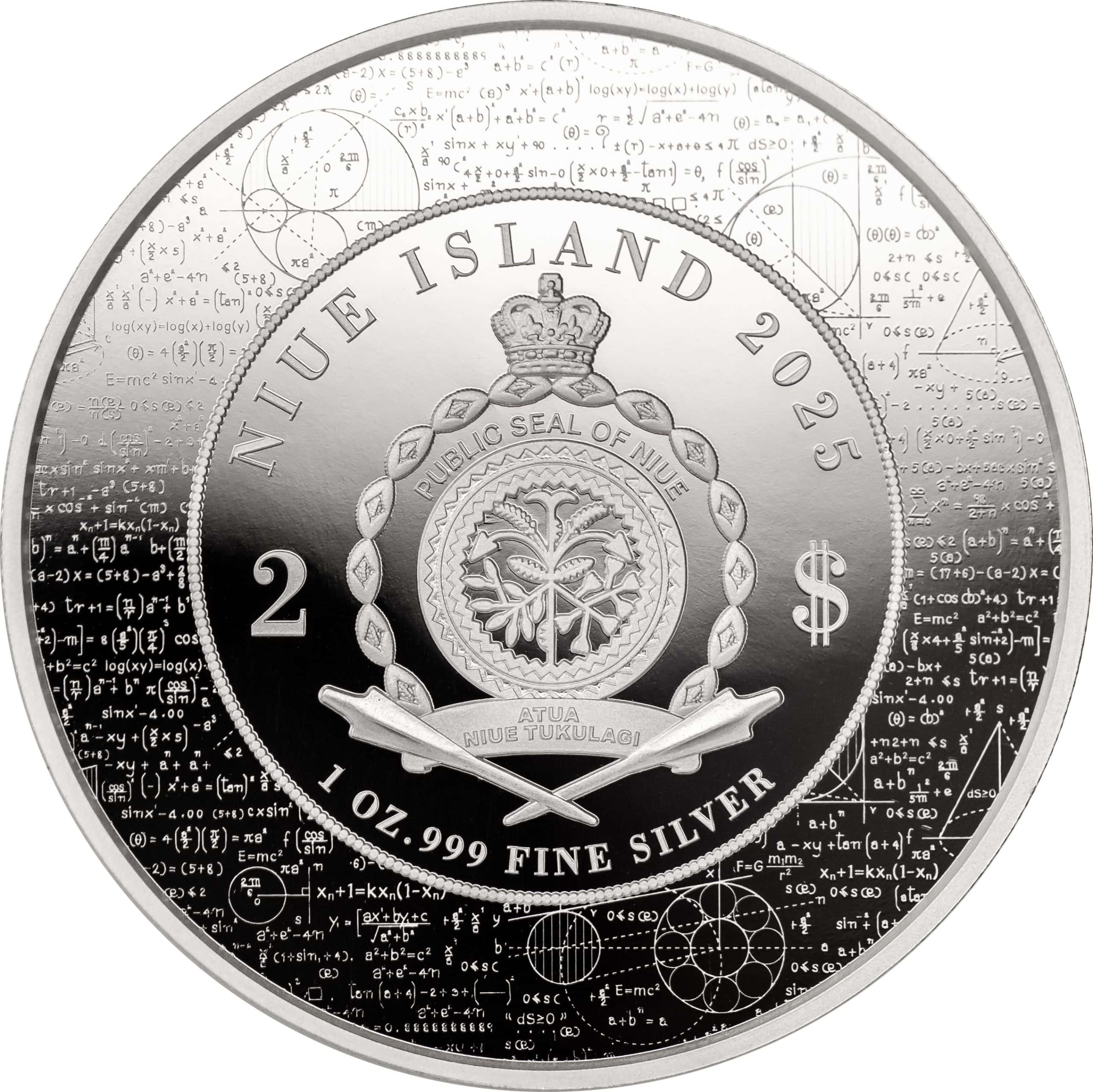
Niue – 2025 – 2 Dollars – Pythagoras (Science Explained series) 1oz silver
€ 159.00
In Stock / On Backorder
Click to see the full Science Explained series
| Issuing Country | Niue |
| Year of Issue | 2025 |
| Face Value | 2 Dollars |
| Metal | Silver |
| Fineness (purity) | 999/1000 |
| Weight | 1 oz |
| Diameter | 40 mm |
| Quality | Proof |
| Mintage | 199 pcs |
| Scope of Delivery | Box Certificate |
| Special features |
Description
Click to see the full Science Explained series
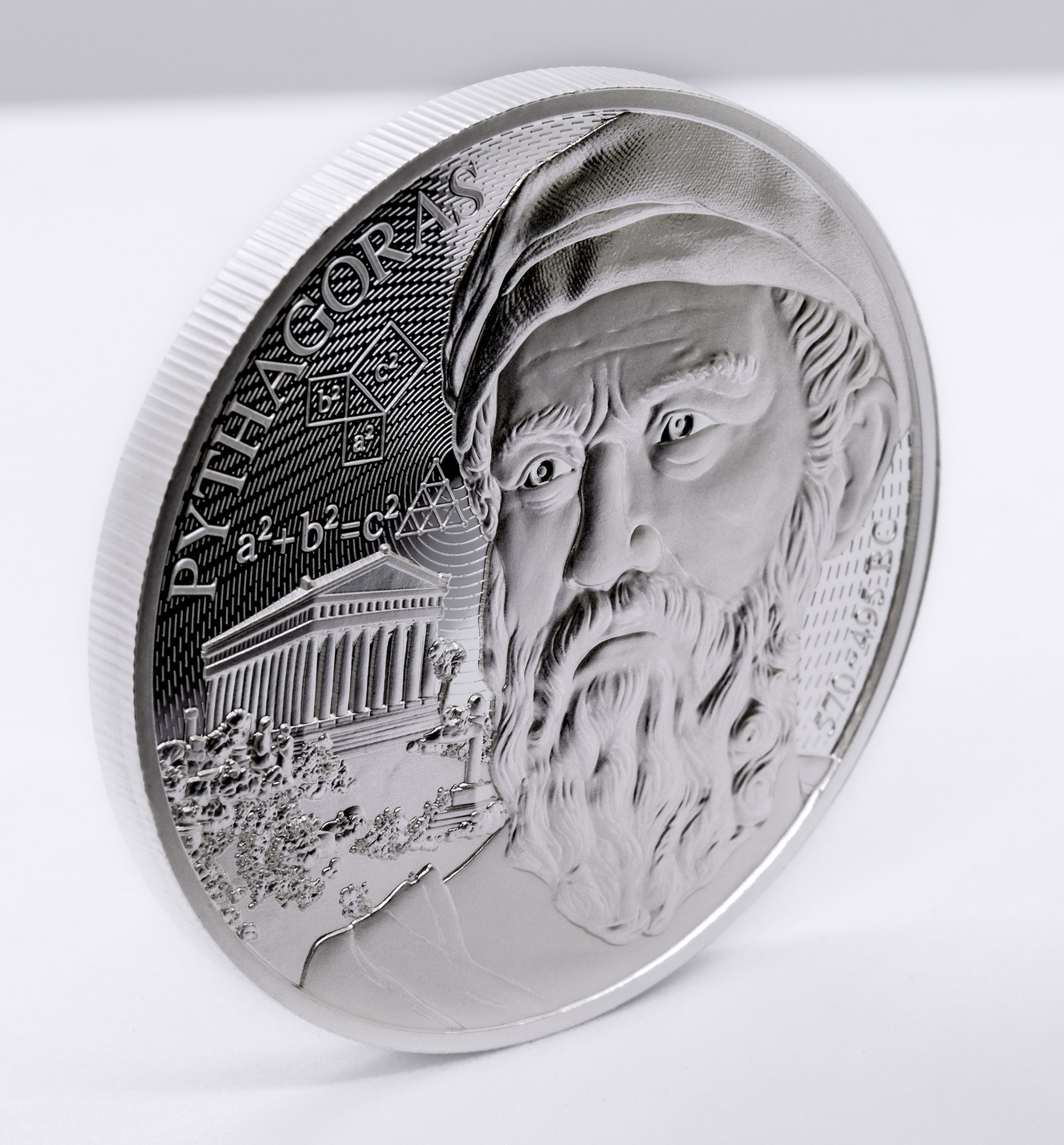
Introducing the first release in the groundbreaking Science Explained series — a bold new collection that transforms fundamental scientific principles into stunning numismatic art. This debut coin celebrates Pythagoras, the ancient Greek thinker whose famous theorem forever changed the world of mathematics.
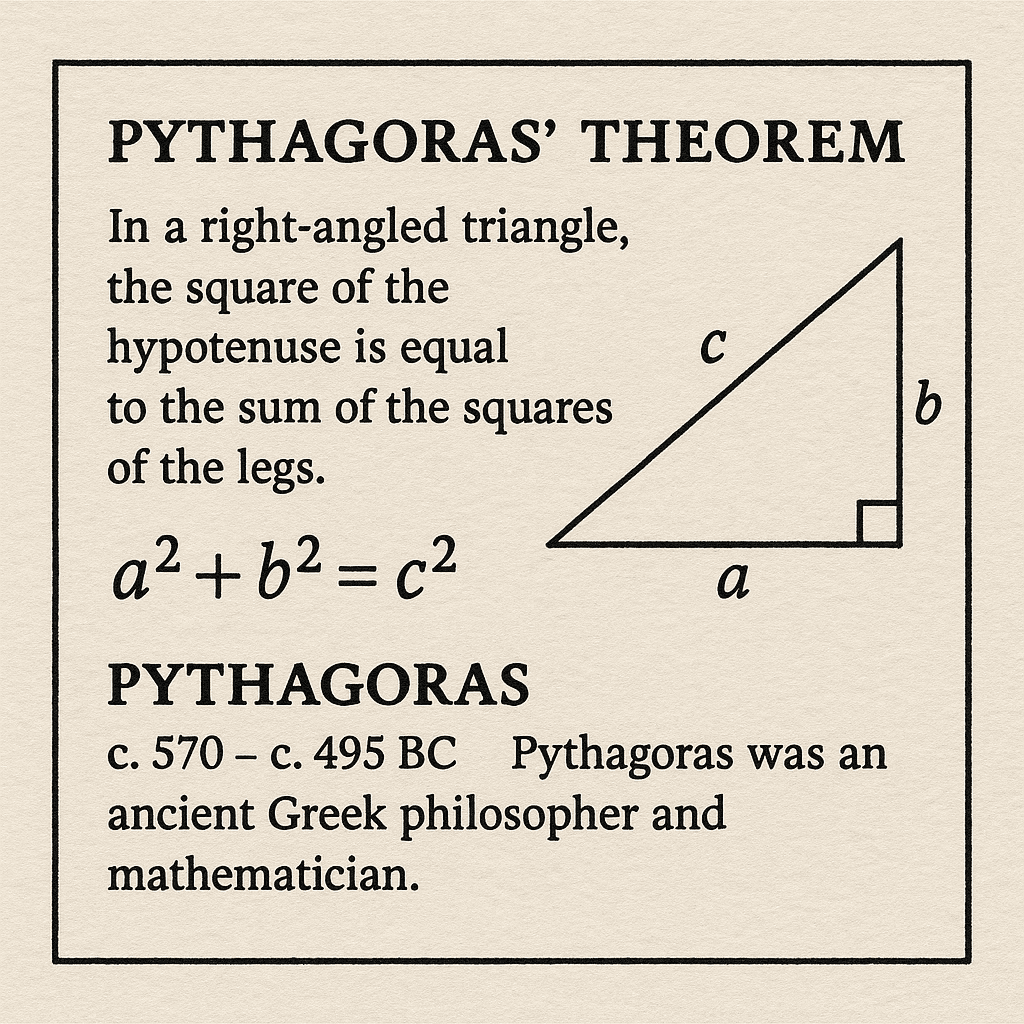
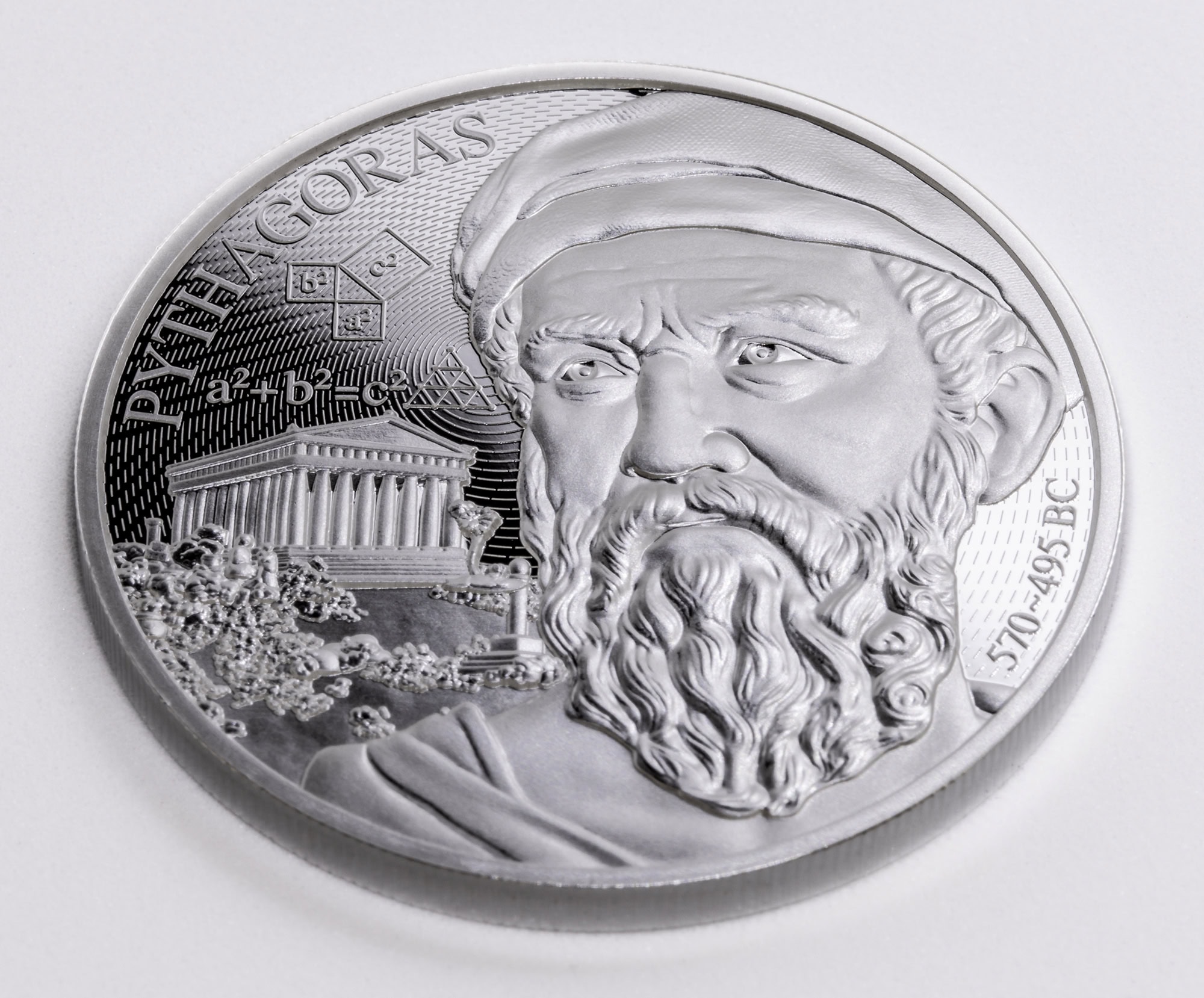
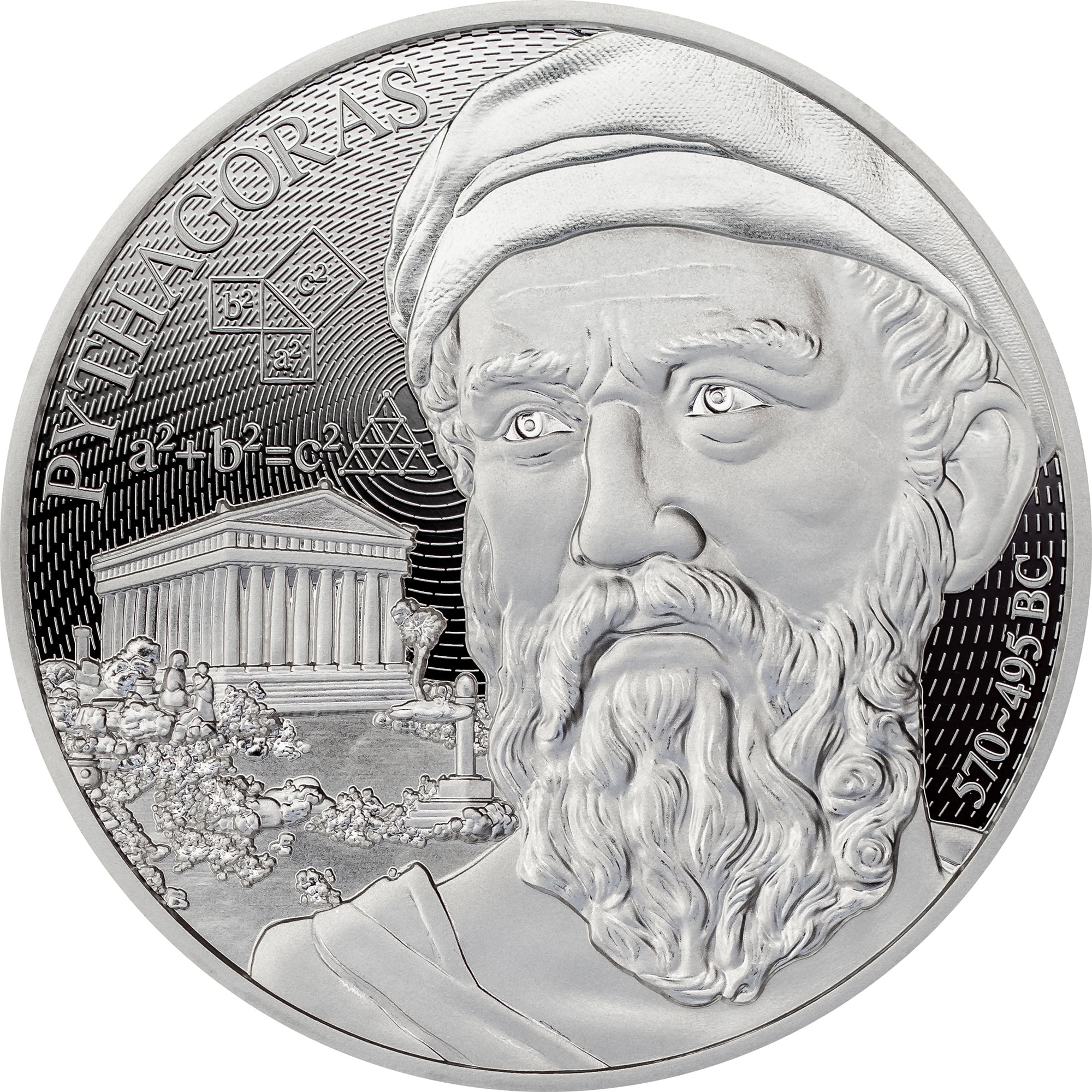
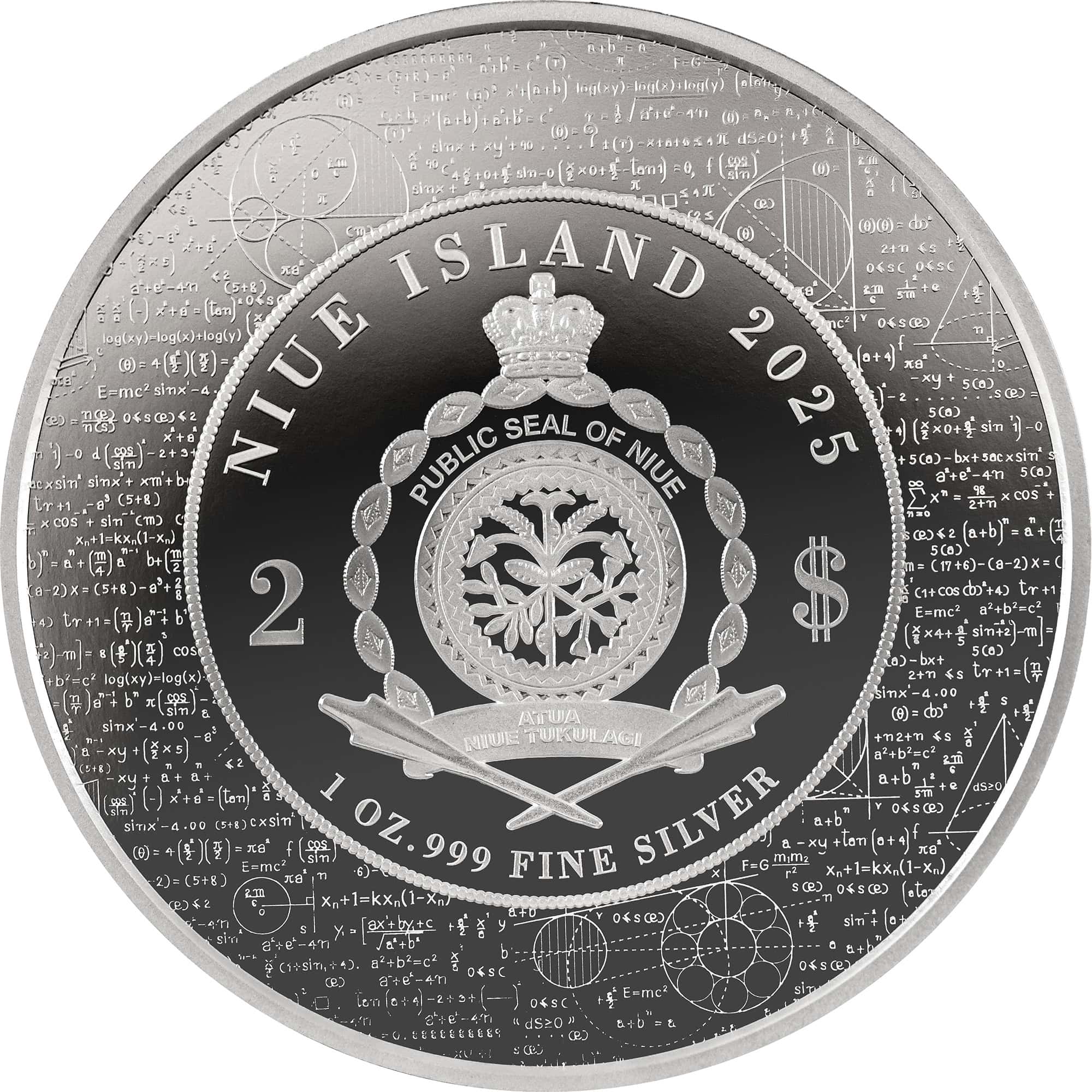
Struck from 1 oz of pure .999 silver and measuring 40mm in diameter, this coin brings knowledge to life through a compelling blend of portraiture and formula. Issued as 2 Dollars legal tender by Niue with a special coat of arms surrounded by a schoolboard full of formulas. It features a high-quality PROOF finish that highlights both the face of Pythagoras and the elegant simplicity of the geometric equation that bears his name: a² + b² = c². It comes in a beautiful blister pack with a certificate of authenticity that also explained the Pythagorean Theorem.
Whether you’re a science enthusiast or a collector of meaningful designs, Science Explained invites you to explore the wonders of human discovery — one equation at a time. Start your journey today with Pythagoras.
Coin description
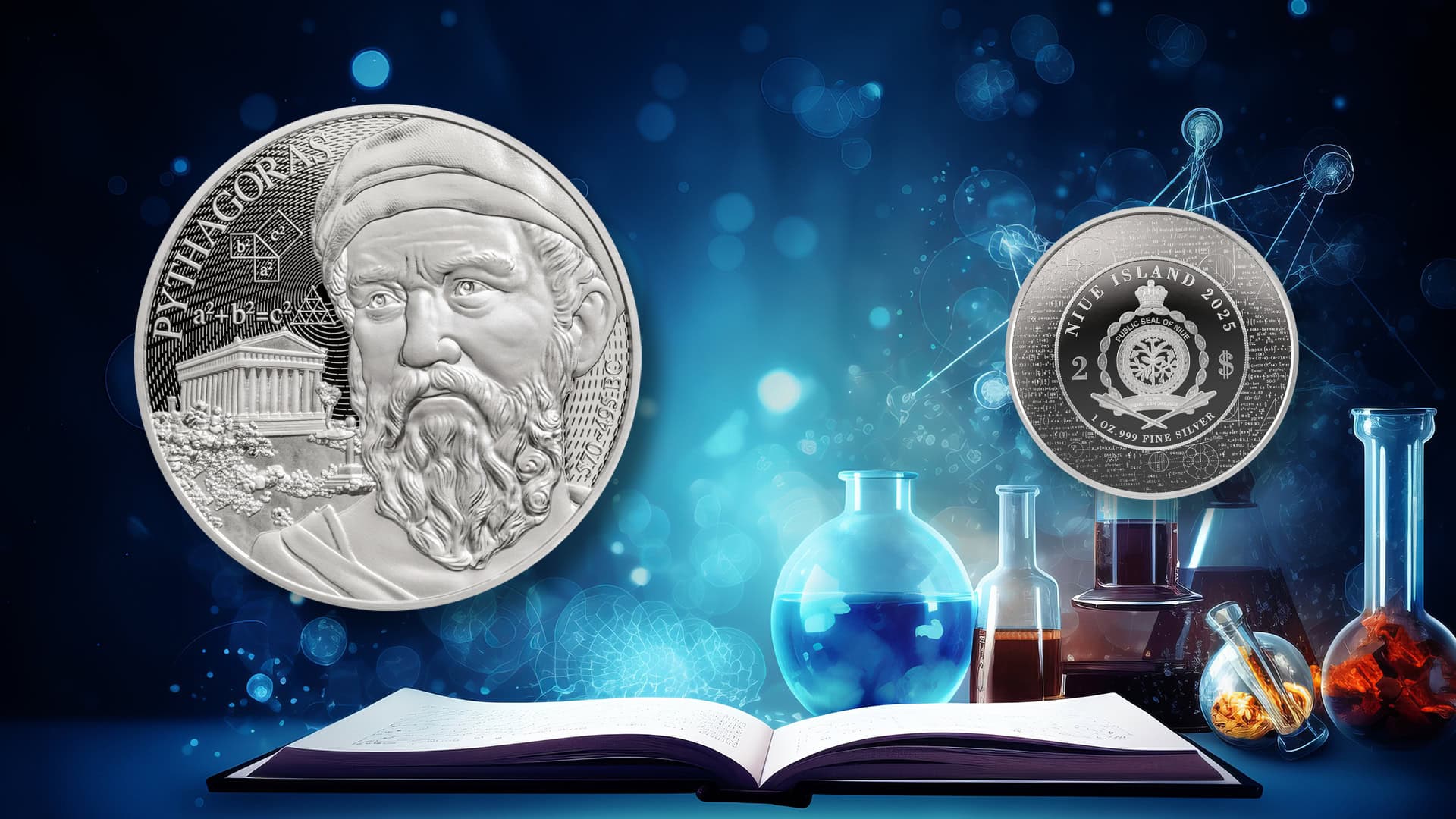
The obverse features the official Coat of Arms of Niue at the center, surrounded by chalk-style scientific formulas etched across a schoolboard-inspired background — a nod to the foundations of learning and discovery.
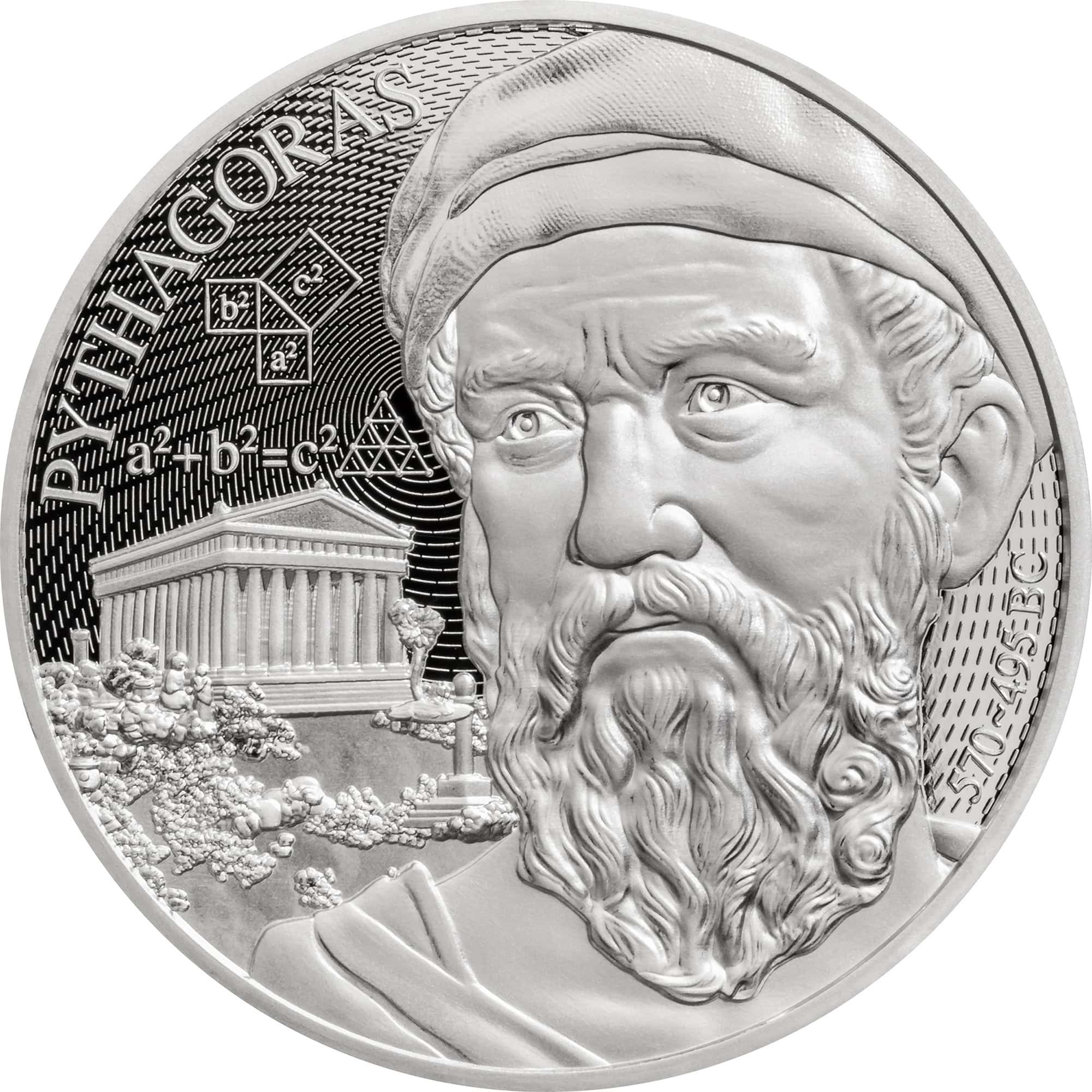
The reverse showcases a detailed portrait of Pythagoras on the right, with his name and life dates (570–495 BC) inscribed at the far edge. On the lower left, a classical Greek temple pays tribute to his heritage. Surrounding the scene are geometric diagrams and the famous Pythagorean theorem, visually illustrating the mathematical legacy that bears his name.
Background information
Pythagoras of Samos (c. 570–495 BC) was an ancient Greek philosopher and mathematician, best known as the founder of the Pythagorean school. He believed that numbers were the essence of all things and viewed mathematics as deeply connected to the spiritual and natural world. Pythagoras and his followers contributed significantly to philosophy, music theory, astronomy, and especially mathematics. Though little of his own writings survive, his legacy endures through the Pythagorean Theorem and the lasting influence of his ideas on later thinkers.
The Pythagorean Theorem, commonly referred to as the a² + b² = c² formula, describes the relationship between the sides of a right-angled triangle. In this formula, a and b represent the lengths of the triangle’s shorter sides (legs), and c is the hypotenuse—the side opposite the right angle. The theorem states that the square of the hypotenuse equals the sum of the squares of the other two sides, a foundational concept in geometry and applied mathematics.
Related products
-
Cameroon – 2025 – 2000 Francs – Apollo / The Great Greek Mythology 2oz silver
€ 365.00 Add to cart -

Cameroon – 2025 – 2000 Francs – Hecate / The Great Greek Mythology 2oz silver
€ 365.00 Add to cart -
Niue – 2024 – 1 Dollars – Maria Sklodowska Curie Nobel Prize
€ 99.95 Add to cart -
Cameroon – 2025 – 2000 Francs – Heracles / The Great Greek Mythology 2oz silver
€ 365.00 Add to cart -
Cameroon – 2024 – 2000 Francs – Odysseus / The Great Greek Mythology
€ 365.00 Add to cart -
Niue – 2025 – 5 Dollars – Valkyrie 2oz silver
€ 315.00 Read more -
Cameroon – 2024 – 5000 Francs – The Eye of Pantheon
€ 599.00 Add to cart -

Palau – 2024 – 50 Dollars – Tiffany Art Metropolis SEOUL 1 kilo edition
€ 5,799.00 Add to cart -
Niue – 2025 – 5 Dollars – Miyamoto Musashi (Legendary Warriors series) 2oz silver
€ 309.00 Read more -
Gabon – 2025 – 2000 Francs – Leth / the Forgetful River
€ 249.00 Add to cart -

Niue – 2024 – 2 Dollars – Victoria Greek Goddess
€ 94.95 Read more -

Niue – 2025 – 2 Dollars – Athena Greek Goddess
€ 129.95 Add to cart


